
Kenya’s Amaranth, Finger Millet Selected for Global Conservation, Promotion Funding
By Milliam Murigi
Kenya’s amaranth and finger millet have been chosen as priority crops for conservation under the newly launched Power of Diversity Funding Facility (PDFF) Initiative.
This is a new initiative by the Crop Trust and funded by the Governments of Ireland and Germany, that aims to secure the long-term conservation and sustainable use of two neglected and underutilized crops in the country.
It will support research, conservation, and value chain development of these two crops to unlock their potential to diversify diets, boost nutrition, strengthen resilience to climate change, and provide new livelihood opportunities for farmers.
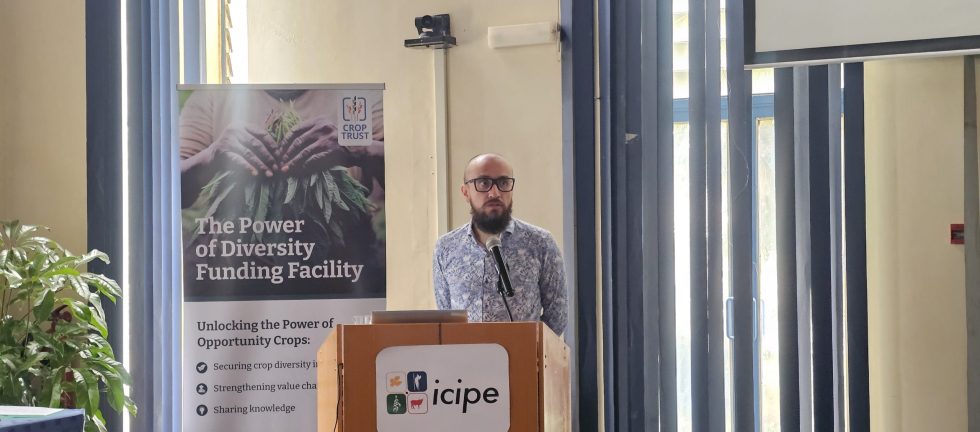
“Now that we have these two crops, we are going to engage in different activities with different partners to conduct a gap analysis that assesses the current state of the crops within the country and explores how to further develop their value chains to make them more accessible to consumers,” says Edwin Garzón-Horta, Power of Diversity Funding Facility Project Specialist.
The two crops were selected from a list of 43 proposed opportunity crops during a two-day national consultation on crop selection for the project. They were identified for their nutritional value, adaptability, and potential to support farmers.
Over the years, Kenyans have abandoned many traditional crops that once formed the backbone of local diets, choosing instead to rely heavily on just a few staples such as maize, wheat, and rice. This shift has not only narrowed the country’s food base but also increased vulnerability to climate shocks and market fluctuations.
According to Garzón-Horta, the initiative was born out of concerns over the rapid loss of biological and agricultural diversity, which threatens the foundation of global food security. He noted that conserving and promoting crops like amaranth and finger millet is essential to reversing this trend and ensuring that future generations have access to a wider pool of resilient and nutritious food options.
“In just a decade, over 40 per cent of food plants and their wild relative have vanished from at least one area where they once grew naturally or were cultivated. This alarming loss not only threatens biodiversity but also undermines the resilience of our food systems, making initiatives like this one more urgent than ever,” he revealed.
According to Peterson Wambugu, from the Genetic Resources Research Institute (GeRRI), for long these two crops remain underutilized largely because of limited research and inadequate investment in seed systems and markets. This is despite the fact that they are highly nutritious. For instance, finger millet is rich in calcium, iron, and dietary fiber, making it an important food for combating malnutrition.
On the other hand, amaranth leaves are packed with vitamins A and C, and the grains provide high-quality protein. However, because of weak breeding programs, poor seed distribution, and limited market linkages, these nutritional benefits remain underutilized, keeping the crops sidelined compared to staples such as maize and wheat.
“The good thing with these two crops is that they can be consumed on their own, and they also carry strong potential for value addition, which makes them attractive both nutritionally and economically,” said Wambugu.
The crops also hold huge market potential. While their consumption has traditionally been low, mostly limited to rural households and older generations, this is now changing. In urban areas, health-conscious consumers are increasingly embracing nutrient-rich alternatives, driven by the rise of lifestyle diseases and growing awareness of the benefits of indigenous foods. As a result, amaranth and finger millet are gradually making their way into supermarkets, health stores, and restaurant menus, signaling a broader shift toward healthier eating habits.
According to Evalyne Okoth, a farmer from Kisumu, the availability of finger millet will help reduce dependency on maize, a crop that has become increasingly unreliable due to pests and erratic rainfall. She notes that millet is not only more resilient but also highly nutritious, making it a valuable alternative for both household consumption and income generation.
Reliance on a narrow range of staple crops, according to her, has forced the country to spend heavily on food imports. Kenya has become a net importer of maize in recent years, highlighting the risks of over-reliance on a single staple crop. Promoting alternatives could help ease this dependency.
“Finger millet is good because of its nutritional content and the fact that it is climate-smart. It is also gender inclusive across the whole value chain. Women are involved in the production and processing, right alongside men and youth,” said Okoth.
The initiative will be implemented in collaboration with Alliance of Bioversity International and CIAT, and Kenya’s Agricultural and Livestock Research Organization (KALRO).